

AI Shopping Is Quietly Replacing Your Funnel
This is the shift nobody asked for… and every brand is about to pay for.
Because the moment an AI assistant becomes the place people decide, your store stops competing on “ads vs. SEO.”
You start competing on: what the assistant believes is true about your product.
And in 2026, that’s the whole game.
What just changed: “Research” and “checkout” are now being stitched together inside the assistant. So the buyer’s journey is getting shorter… and more brutal.
| If your product isn’t the obvious answer inside AI shopping flows, your CAC doesn’t just rise. Your demand gets rerouted. |
What We’re Seeing Right Now
Three signals are converging fast:
- AI research is becoming the default for shopping decisions.
People don’t want 14 tabs. They want one answer and a buy button. - Ads are moving into AI answers (not just around them).
If your brand isn’t eligible for the new placements, you’re not “missing a channel.” You’re missing the moment of intent. - The assistant is building a new “product truth layer.”
It’s stitching together your PDP, reviews, policies, UGC, creator content, and third-party coverage into one mental model.
Your job is to shape that model before it shapes you.
The 7-Day “AI Shelf Audit”
Do this once. Your team will find leaks you didn’t know existed.
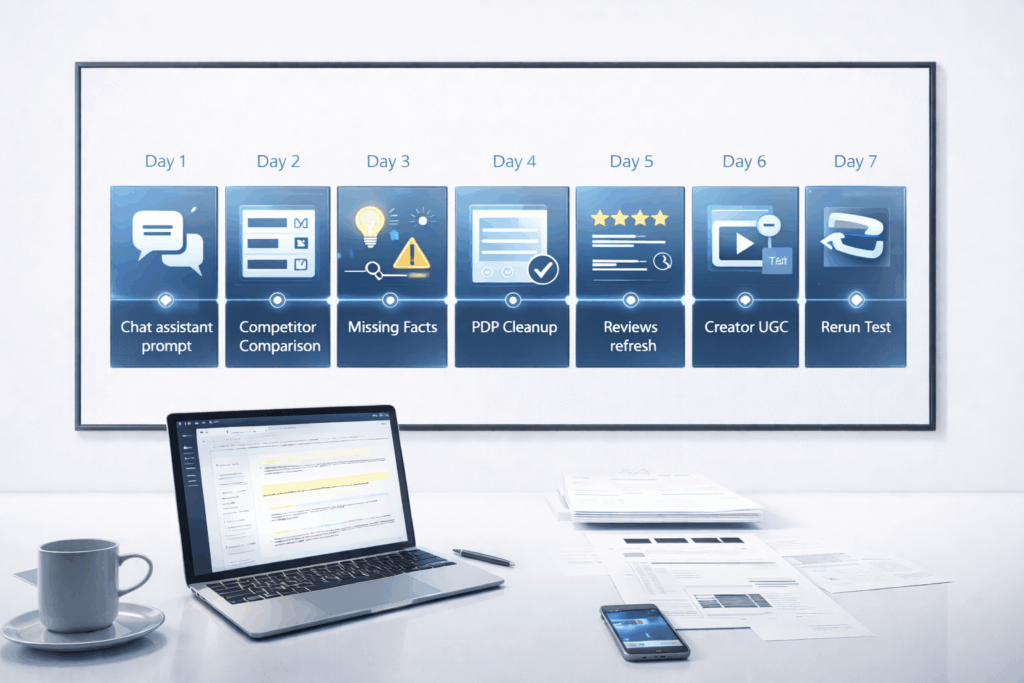
Day 1: Ask the assistants to recommend your category (and screenshot what they say).
Day 2: Compare how they describe you vs. your top 3 competitors.
Day 3: Identify the “missing facts” (shipping, returns, sizing, durability, warranty, etc.).
Day 4: Fix your PDP truth layer (copy, schema, specs, FAQs, policies).
Day 5: Fix your review layer (review volume, recency, photo reviews, Q&A coverage).
Day 6: Fix your creator layer (UGC that answers objections in plain language).
Day 7: Run the same prompts again and confirm the narrative shifted.
If the assistant still won’t pick you after this?
That’s not a “branding problem.” That’s a truth problem.
What Quietly Changed in the Market
The “Product Truth Layer” Became a Ranking System
Here’s the part most teams will miss:
AI shopping doesn’t rank you the way search does. It filters you the way a human would — based on confidence.
Confidence comes from consistency.
If your product facts don’t match across the web…
If reviews don’t reinforce your claims…
If shipping/returns are vague…
If sizing or specs are thin…
The assistant will hedge — and hedging kills conversion.
| The new question to ask: “What would make an AI assistant feel safe recommending us?” |
The Bridge Report: Where Marketers Find Momentum
Trend of the Week
Brands aren’t asking for “more ads” right now. They’re asking for visibility inside AI shopping flows — which usually turns into:
- feed + PDP cleanup
- review velocity
- creator content that answers objections
- stronger policy clarity (shipping, returns, warranty)
Insight of the Week
The brands moving fastest aren’t trying to “hack AI.”
They’re doing something simpler: They’re making their product the easiest to confidently recommend.
Strategy of the Week
If you own Paid + CRO: pair AI Shelf Audit with a PDP Truth Sprint (one week, one SKU family).That combo tends to unlock both better conversion and better assistant recommendations.
Hot take: In 2026, “SEO” is going to split into two jobs:
- ranking in links
- ranking in answers
Question for you:
If an AI assistant had to recommend your product in one sentence… what would it say today?
| Reply with the sentence — and I’ll tell you what it’s missing. |
Fast Four
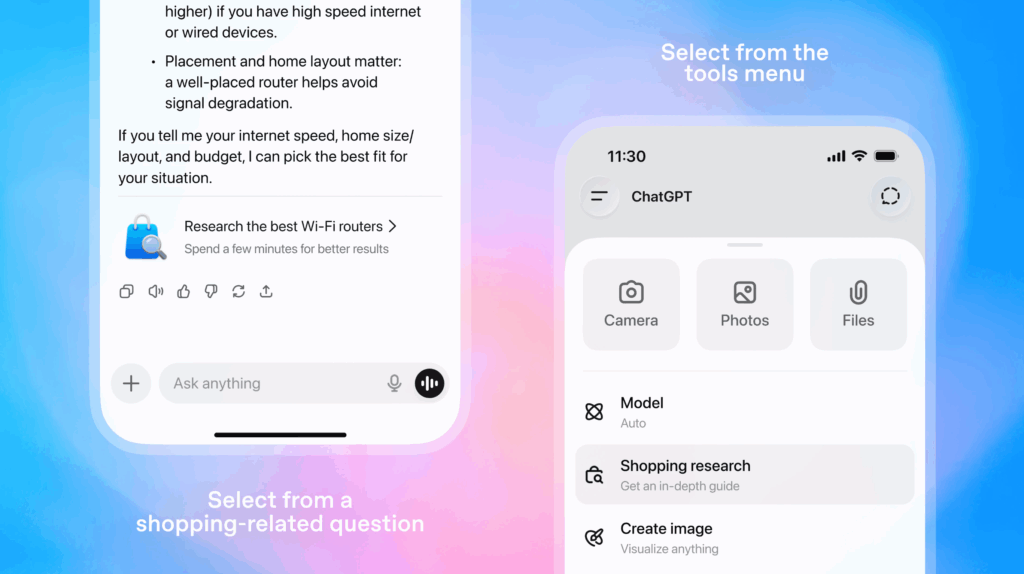
Tool I’m Testing
ChatGPT Shopping Research (use it like a buyer, not a marketer)
https://openai.com/index/chatgpt-shopping-research/
Article Worth Reading
Buy it in ChatGPT: Instant Checkout and the Agentic Commerce Protocol
https://openai.com/index/buy-it-in-chatgpt/
Prompt of the Week
“Act like a brutally honest personal shopper. I’m buying [category]. My constraints: [budget, use case, dealbreakers].
Recommend 3 options and explain what you trust (and what you don’t) about each option. Then tell me what would make you more confident recommending [my brand/product URL].”
Resource Worth Stealing
About ads and AI Overviews (eligibility + how it works)
https://support.google.com/google-ads/answer/16297775
Growth Virality Drop
The Ecomm Ads Toolkit (Built for 2026)
If you’re staring at stalled performance and you know it’s not “just make more ads”… this is the shortcut.
The toolkit is built to fix the stuff that actually drives ROAS: creative, offers, funnel flow, and the boring foundations most brands skip.
What’s inside:
- Custom ROAS Audit service
- Copy & Creative Kit
- Google Ads Kit
- Meta Ads Kit
- Advanced Ad Tactics/Playbooks
- Lifetime access & updates
| Custom ROAS Audit service. Our experts can analyze your ad campaigns, pinpoint areas for improvement, and provide customized strategies. It’s the perfect hands-off solution to supercharge your ROAS. Plans and Pricing Ads Toolkit — $97 (1-time purchase) Ads Toolkit Bundle — $127 (1-time purchase) Includes Ads Launchpad Community (1-month free) + InTrend Ads Dashboard (1-month free) Then $97/mo after that. Cancel anytime. Risk free 14-day money-back guarantee Get it here: toolkit.growthvirality.com |
Growth Marketers Might Ask
“Is this just another ‘SEO is dead’ headline?”
No. This is “the decision point moved.” Links still matter, but answers are stealing the click.
“Do I need to optimize for every assistant?”
Not at first. Start with your category + your top SKUs. Win one lane, then expand.
“What’s the fastest lever?”
Your PDP truth layer. Most brands are leaking confidence because basic facts are inconsistent or unclear.
“Where do ads fit now?”
Ads are becoming the paid door into the answer layer. If you’re not eligible, you’re not present.
What to Test This Week
- Run the AI Shelf Audit on your top SKU and screenshot the “truth gaps.”
- Patch the top 5 gaps on your PDP (specs, FAQ, policies, objection copy).
- Create 3 pieces of UGC that answer the top 3 objections in plain language.
Next week in the arc: we’ll go deeper on the Product Truth Layer, and how to build it like an asset (not a one-time cleanup).